
Why Is a 24kV Solid Insulated Ring Main Unit Becoming the Preferred Choice for Modern Power Distribution
As power distribution networks continue evolving toward higher safety, lower maintenance, and greater environmental sustainability, the 24kV Solid Insulated Ring Main Unit has become an increasingly popular solution for utilities, renewable energy projects, industrial facilities, and commercial buildings. In this article, we explain how this innovative switchgear differs from conventional gas-insulated systems, explore its working principles, technical advantages, application scenarios, and purchasing considerations, and demonstrate why CNKEEYA provides reliable medium-voltage distribution solutions for customers worldwide.
Contents
- Introduction
- What Is a 24kV Solid Insulated Ring Main Unit?
- Major Advantages of Solid Insulated RMUs
- How Does It Work?
- Continue Reading
Introduction
The demand for safer and greener electrical infrastructure has accelerated the adoption of the 24kV Solid Insulated Ring Main Unit across modern distribution networks. As an experienced manufacturer of medium-voltage electrical equipment, CNKEEYA delivers advanced solid insulated switchgear solutions designed to improve operational reliability while reducing environmental impact. Compared with traditional SF₆ gas-insulated equipment, solid insulated technology offers enhanced safety, simplified maintenance, and excellent long-term performance, making it an ideal choice for utilities, industrial plants, renewable energy stations, airports, rail transit systems, and smart city projects.
Whether a project involves upgrading an aging power grid or constructing a brand-new electrical distribution system, selecting the appropriate ring main unit directly influences operational efficiency, maintenance costs, equipment lifespan, and network reliability. Understanding the technical characteristics of solid insulated switchgear enables engineers and purchasing managers to make informed investment decisions.
What Is a 24kV Solid Insulated Ring Main Unit?
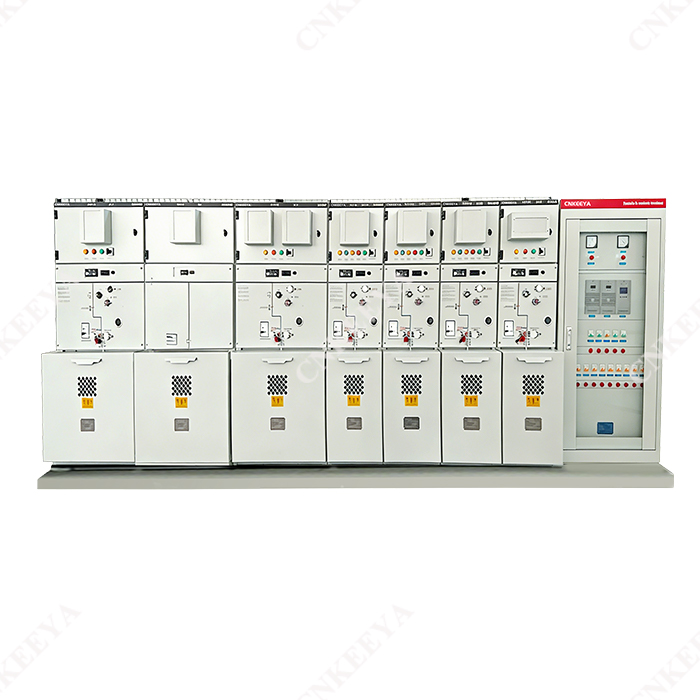
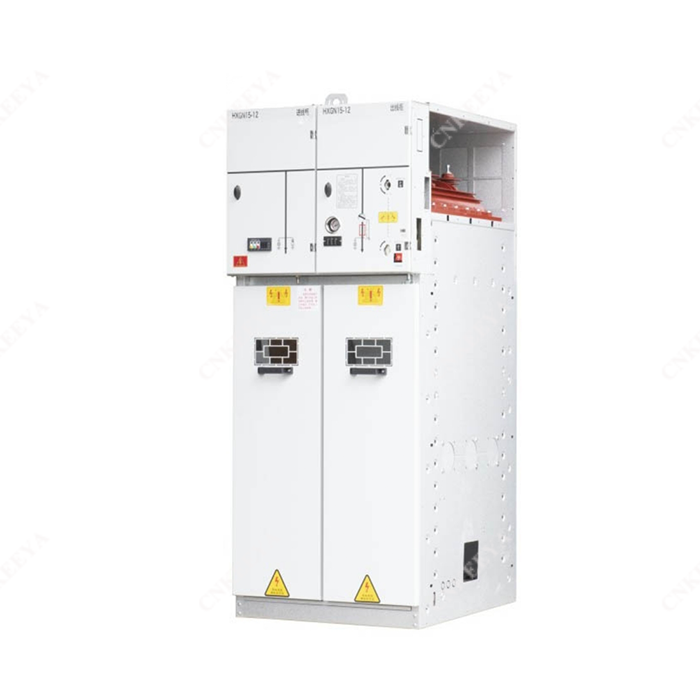
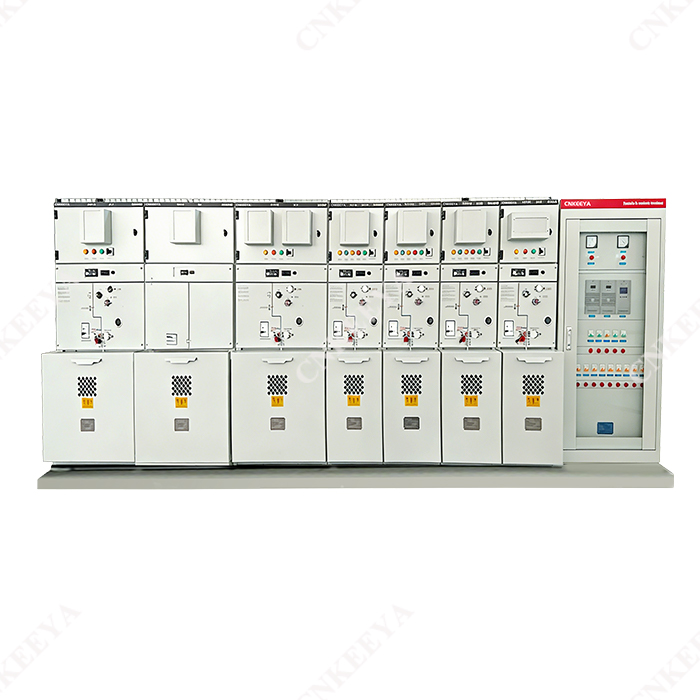
A 24kV Solid Insulated Ring Main Unit (RMU) is a compact medium-voltage switchgear assembly designed for secondary power distribution networks operating up to 24 kilovolts. Instead of relying on SF₆ gas as the primary insulation medium, it utilizes advanced solid dielectric materials to isolate energized components safely.
The RMU integrates multiple functional units into one compact enclosure, including:
- Load break switches
- Circuit breakers
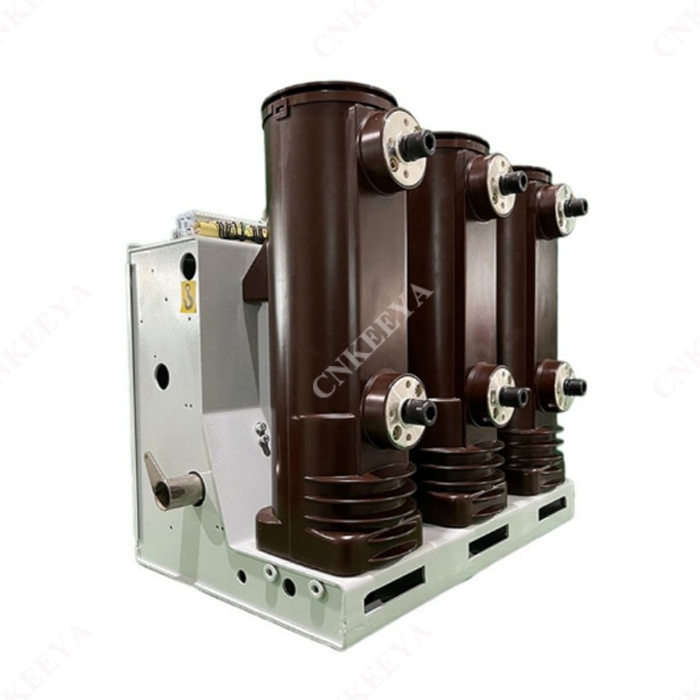
- Vacuum interrupters
- Earthing switches
- Busbars
- Protection relays
- Cable connection compartments
Because all energized conductors are encapsulated within high-performance solid insulation materials, the equipment becomes highly resistant to dust, humidity, condensation, pollution, and external environmental influences. This construction significantly improves operational stability even under demanding installation conditions.
Unlike conventional air-insulated switchgear, solid insulated RMUs require much less installation space while offering higher operational safety. Compared with SF₆ gas-insulated systems, they eliminate greenhouse gas leakage risks and simplify environmental compliance throughout the equipment lifecycle.
Major Advantages of Solid Insulated RMUs
Growing numbers of utility companies and industrial users are replacing traditional switchgear with solid insulated alternatives because of several compelling advantages.
1. Environmentally Friendly Design
One of the most significant benefits is the elimination of sulfur hexafluoride (SF₆), a greenhouse gas with an extremely high global warming potential. By replacing gas insulation with solid dielectric materials, the equipment supports sustainable power infrastructure and helps organizations meet increasingly strict environmental regulations.
2. Higher Operational Safety
Solid insulation fully encapsulates live conductors, minimizing the possibility of accidental contact, flashover, or insulation failure. Operators benefit from improved personal safety during switching and maintenance operations.
3. Excellent Resistance to Harsh Environments
Solid insulated RMUs maintain excellent electrical performance in locations exposed to:
- High humidity
- Salt spray
- Heavy industrial pollution
- Dust accumulation
- High altitude
- Frequent temperature fluctuations
This environmental adaptability significantly reduces unexpected outages caused by insulation degradation.
4. Compact Installation Footprint
Urban substations, underground distribution rooms, commercial buildings, and renewable energy stations often have limited installation space. The compact structural design allows engineers to maximize available floor area while maintaining safe operating clearances.
5. Reduced Maintenance Requirements
Because there is no gas pressure monitoring, leakage inspection, or gas replenishment, maintenance activities become considerably simpler. This translates into lower lifecycle costs and reduced downtime throughout the equipment's service life.
How Does a 24kV Solid Insulated Ring Main Unit Work?
Although the insulation technology differs from conventional gas-insulated equipment, the operational principle remains familiar to medium-voltage engineers.
Incoming electrical power enters the RMU through incoming feeders before reaching the internal busbar system. Depending on network operating conditions, switching devices direct electrical energy toward outgoing feeders while protection devices continuously monitor circuit conditions.
If abnormal situations such as overloads, short circuits, or earth faults occur, protection relays immediately activate the vacuum circuit breaker, isolating the faulted section and minimizing service interruption to unaffected portions of the distribution network.
Solid dielectric insulation permanently surrounds energized conductors, ensuring electrical isolation without relying on pressurized insulating gas. The result is stable dielectric performance, excellent insulation reliability, and minimal maintenance throughout the equipment's operational lifetime.
In addition, modern intelligent RMUs can integrate digital monitoring systems capable of collecting real-time operational data, enabling predictive maintenance strategies and supporting the development of smart grid infrastructure.
Technical Structure Comparison of 24kV Solid Insulated RMU vs Traditional Systems
Understanding the structural differences between insulation technologies helps engineers select the right solution for specific distribution scenarios. The 24kV Solid Insulated Ring Main Unit offers a fundamentally different approach compared to air-insulated and SF₆ gas-insulated systems.
| Feature | Solid Insulated RMU | SF₆ Gas Insulated RMU | Air Insulated Switchgear |
|---|---|---|---|
| Insulation Medium | Solid epoxy / composite materials | SF₆ gas | Air |
| Environmental Impact | Zero greenhouse gas emission | High global warming potential | Eco-friendly |
| Maintenance Requirement | Very low | Medium (gas monitoring needed) | High (dust/cleaning required) |
| Installation Space | Very compact | Compact | Large footprint |
| Safety Level | Very high (fully encapsulated) | High | Medium |
| Service Life | 20–30+ years | 20–25 years | 15–20 years |
Core Components of Solid Insulated RMU
A high-performance RMU is built from several integrated functional modules, each designed for reliability and operational safety.
Vacuum Circuit Breaker Unit
Responsible for interrupting fault currents, the vacuum interrupter ensures arc extinction in a sealed environment, providing stable and reliable switching performance even under high load conditions.
Load Break Switch Unit
This component allows safe switching of normal load currents, enabling operators to reconfigure distribution networks without interrupting supply stability.
Feeder Protection System
Advanced protection relays detect abnormal electrical conditions such as overcurrent, short circuits, and earth faults, triggering immediate isolation of affected circuits.
Busbar Assembly
The internal busbar system distributes electrical energy across multiple outgoing feeders while maintaining consistent conductivity and minimal energy loss.
Performance Benefits in Real-World Applications
In practical deployment scenarios, solid insulated RMUs demonstrate significant advantages in terms of reliability and lifecycle cost efficiency.
- Reduced outage frequency in urban distribution grids
- Stable operation in coastal and high-humidity environments
- Lower lifecycle maintenance costs for utilities
- Improved safety for operators in confined substations
- Higher system reliability in renewable energy integration
For example, in solar and wind power plants, where environmental exposure is severe and maintenance access is limited, solid insulated technology provides a stable and maintenance-free switching solution that ensures uninterrupted power flow to the grid.
Key Engineering Design Features
Modern RMUs developed by manufacturers like CNKEEYA incorporate advanced engineering principles to ensure superior performance and long-term durability.
- Fully sealed insulation structure preventing external contamination
- Modular design for flexible system expansion
- Integrated protection and automation systems
- High dielectric strength composite materials
- Arc-resistant construction for enhanced operator safety
These features collectively ensure stable operation in complex distribution environments, making the equipment suitable for both urban and industrial applications.
Typical Applications of 24kV Solid Insulated Ring Main Unit
The 24kV Solid Insulated Ring Main Unit is widely used across multiple industries due to its compact design, high safety level, and strong environmental adaptability. Manufacturers such as CNKEEYA design these systems to meet the demands of modern intelligent power distribution networks.
- Urban Power Distribution Networks: Ensures reliable electricity supply in densely populated cities where space is limited.
- Industrial Facilities: Provides stable power distribution for manufacturing plants, chemical factories, and heavy industry zones.
- Renewable Energy Plants: Ideal for solar farms and wind power stations requiring low-maintenance switchgear.
- Transportation Infrastructure: Used in airports, metro systems, railways, and tunnels for safe and stable power control.
- Commercial Buildings: Supports shopping malls, hospitals, data centers, and high-rise buildings with continuous power demand.
- Smart Grid Projects: Integrates with digital monitoring systems for intelligent energy management.
Installation and Operation Best Practices
To ensure long-term reliability and safe operation of a solid insulated RMU system, proper installation and operational procedures must be followed.
1. Proper Site Preparation
The installation environment should be clean, dry, and free from corrosive gases. Even though solid insulation is highly resistant to contamination, proper installation conditions enhance long-term performance.
2. Correct Cable Termination
High-quality cable accessories must be used to ensure stable electrical connections and minimize partial discharge risks.
3. Routine Inspection Strategy
Although maintenance requirements are minimal, periodic inspection of mechanical operation, protection systems, and external enclosures is recommended.
4. Electrical Testing Before Commissioning
Before energizing the system, insulation resistance tests, functional switching tests, and relay protection verification must be completed.
5. Environmental Monitoring
In critical installations such as data centers or industrial plants, temperature and humidity monitoring helps maintain optimal operating conditions.
Selection Guide for Buyers and Engineers
Choosing the right 24kV Solid Insulated Ring Main Unit requires careful evaluation of system requirements and environmental conditions.
- Rated voltage and current requirements
- Short-circuit breaking capacity
- Number of outgoing feeders
- Environmental conditions (humidity, pollution level, altitude)
- Space availability for installation
- Integration with smart grid or automation systems
Working with a reliable manufacturer such as CNKEEYA ensures that the selected solution meets both technical specifications and long-term operational expectations.
Why Solid Insulated Technology Is the Future
The global energy sector is rapidly transitioning toward safer, greener, and more intelligent infrastructure. Solid insulated switchgear technology aligns perfectly with this transformation.
Unlike SF₆-based systems, it eliminates greenhouse gas concerns while improving operator safety and reducing lifecycle maintenance costs. As smart grid development accelerates, demand for compact, digitally compatible switchgear continues to increase.
This positions the 24kV Solid Insulated Ring Main Unit as a future-ready solution for modern electrical distribution networks worldwide.
Frequently Asked Questions (FAQ)
What is a 24kV Solid Insulated Ring Main Unit used for?
It is used in medium-voltage power distribution systems to control, protect, and isolate electrical circuits in urban grids, industrial plants, and renewable energy projects.
How is solid insulation different from SF₆ gas insulation?
Solid insulation uses epoxy or composite materials to isolate conductors, while SF₆ systems rely on pressurized gas. Solid insulation eliminates greenhouse gas emissions and reduces maintenance requirements.
Is a solid insulated RMU safe for urban installation?
Yes. Its fully enclosed design prevents accidental contact with live parts and performs reliably even in compact underground or indoor substations.
What is the lifespan of a 24kV Solid Insulated Ring Main Unit?
Typically, it can operate reliably for 20–30 years depending on environmental conditions and load profiles.
Does it require frequent maintenance?
No. One of its main advantages is low maintenance, as there is no gas monitoring or replenishment required.
Can it be integrated into smart grid systems?
Yes. Modern designs support digital monitoring, remote control, and intelligent fault detection for smart grid applications.
Conclusion
The 24kV Solid Insulated Ring Main Unit represents a major step forward in medium-voltage distribution technology. With its environmentally friendly design, compact structure, high safety level, and long service life, it is rapidly becoming the preferred solution for modern power networks.
By eliminating SF₆ gas and adopting solid dielectric insulation, this technology not only enhances operational safety but also supports global sustainability goals. From urban infrastructure to renewable energy systems, its versatility makes it a key component in next-generation electrical distribution.
Get in Touch
If you are planning to upgrade your power distribution system or looking for a reliable medium-voltage switchgear solution, CNKEEYA provides professional engineering support and high-quality products tailored to your project requirements.
For technical consultation, pricing, or customized solutions, please contact us today and our team will assist you with the most suitable 24kV solid insulated RMU configuration for your application.
Related News
- Can a GGD Low Voltage Power Distribution Cabinet Deliver Safer, More Reliable Power Distribution
- How Can Post Insulator ZJ-10Q85x140(145/150) Improve the Safety and Reliability of Medium Voltage Power Systems
- Why Is the HYB1-125 C100 MCB Miniature Circuit Breaker the Smart Choice for Reliable Electrical Protection
- How Can the LW36-126 Outdoor High-Voltage AC Sulfur Hexafluoride (SF₆) Circuit Breaker Improve the Reliability of Modern Power Systems
- Why Is XRNP-11 the Preferred High-Voltage Current-Limiting Fuse for Transformer Protection
- Why Is 12kV Fully Insulated Inflatable Ring Switch Equipment Becoming the Preferred Choice for Modern Power Distribution Networks
Leave me a message