
Can a GGD Low Voltage Power Distribution Cabinet Deliver Safer, More Reliable Power Distribution
Article Summary: A GGD Low Voltage Power Distribution Cabinet is a fixed low-voltage distribution solution designed for reliable power conversion, distribution, protection, and control. This guide explains its operating principles, electrical performance, applications, configuration options, installation conditions, and key purchasing considerations, helping electrical engineers, EPC contractors, distributors, and industrial buyers select a suitable solution.
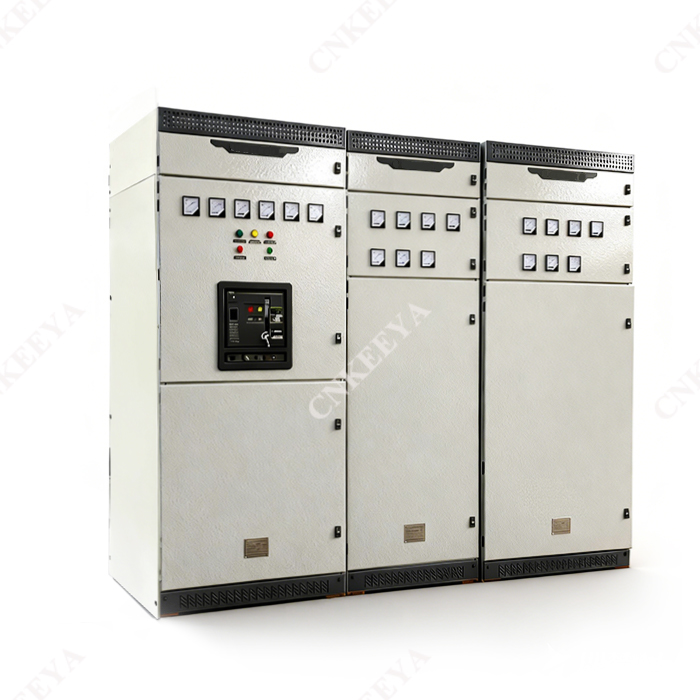
Table of Contents
1. What Is a GGD Low Voltage Power Distribution Cabinet?
2. Why Choose a GGD Low Voltage Power Distribution Cabinet?
3. What Are the Key Technical Parameters?
4. Where Is a GGD Cabinet Used?
5. What Design Features Improve Reliability?
6. How Should Buyers Select the Right GGD Cabinet?
7. FAQ About GGD Low Voltage Power Distribution Cabinets
What Is a GGD Low Voltage Power Distribution Cabinet?
When reliable low-voltage power distribution is essential, CNKEEYA provides the GGD Low Voltage Power Distribution Cabinet as a practical solution for industrial and infrastructure electrical systems. Designed for AC power distribution, conversion, protection, and control, the GGD cabinet is suitable for applications such as power plants, substations, mining enterprises, and other major power users.
According to CNKEEYA's product information, the GGD AC low-voltage cabinet is designed for distribution systems with a rated working voltage of 380V and rated working current up to 3150A. Its design emphasizes safety, economy, reliability, practical electrical configuration, and convenient installation.
The cabinet can accommodate different electrical components and circuit arrangements, allowing engineers to configure a distribution system according to load requirements. This makes the GGD design particularly useful where a fixed, robust, and economical low-voltage distribution solution is required.
CNKEEYA also states that the product complies with relevant low-voltage switchgear standards, including IEC 439 and GB7251. Buyers should nevertheless confirm the latest applicable standard edition and project-specific certification requirements before placing an order.
Why Choose a GGD Low Voltage Power Distribution Cabinet?
A distribution cabinet is more than a metal enclosure. It forms an important interface between the incoming electrical supply and downstream loads. A properly engineered GGD cabinet can help organize power distribution while providing protection and operational control.
1. High Current Distribution Capability
The GGD series covers different current ranges. The GGD3 configuration, for example, can reach a rated current of 3150A according to the manufacturer's published specifications. This makes the series suitable for relatively high-capacity low-voltage distribution applications.
2. Strong Short-Circuit Withstand Performance
Electrical distribution equipment must withstand abnormal operating conditions without compromising system integrity. Depending on the model, the published GGD specifications provide rated short-circuit breaking currents from 15kA to 50kA and rated peak withstand currents from 30kA to 105kA.
3. Flexible Electrical Configuration
CNKEEYA's published information identifies 129 main-circuit solutions and 298 specifications across the GGD range. This broad configuration capability allows the cabinet to be adapted to different distribution architectures, load arrangements, and project requirements.
4. Practical Fixed-Type Construction
Unlike withdrawable switchgear, the GGD concept uses a fixed installation structure. This can provide a straightforward solution for projects where frequent withdrawal and replacement of functional units is not a primary requirement.
5. Improved Busbar Support
The cabinet incorporates dedicated busbar clamps and insulating supports. CNKEEYA describes its ZMJ combined bus clamp as using high-strength, flame-retardant PPO alloy material, while the insulating support adopts a molded sleeve-type structure designed to improve mechanical strength and creepage performance.
What Are the Key Technical Parameters?
Technical parameters should always be matched with the actual electrical design rather than selected solely according to cabinet model. The following table summarizes key published parameters for the GGD series.
| Model | Rated Voltage | Rated Current | Short-Circuit Breaking Current | 1s Short-Time Withstand Current | Peak Withstand Current |
|---|---|---|---|---|---|
| GGD1 | 380V | 400–1000A | 15kA | 15kA | 30kA |
| GGD2 | 380V | 600–1600A | 30kA | 30kA | 63kA |
| GGD3 | 380V | 2000–3150A | 50kA | 50kA | 105kA |
Note: Values are based on CNKEEYA's published product information. Final specifications should be confirmed with the manufacturer according to the selected configuration and project requirements.
For buyers, the most important parameters to verify include:
- Rated operating voltage and frequency
- Rated current and expected load demand
- Short-circuit breaking capacity
- Short-time and peak withstand current
- Busbar material and configuration
- Protection requirements
- Cabinet dimensions and installation space
- Environmental and altitude conditions
- Required electrical components and circuit arrangement
- Applicable standards and project certifications
Where Is a GGD Cabinet Used?
The GGD Low Voltage Power Distribution Cabinet is designed for a broad range of power distribution environments. Its combination of high current capacity, fixed construction, flexible circuit solutions, and practical maintenance characteristics makes it suitable for several sectors.
Power Plants and Substations
In power generation and substation environments, low-voltage distribution equipment is required to distribute electricity to auxiliary systems, lighting circuits, motors, and other downstream loads.
Industrial Facilities
Manufacturing plants often have multiple electrical loads operating simultaneously. A properly configured GGD cabinet can organize power distribution between production equipment, auxiliary systems, lighting, and other plant loads.
Mining Projects
Mining operations typically require dependable electrical distribution for equipment and supporting infrastructure. The GGD design can be considered where a fixed low-voltage distribution architecture matches the project's electrical requirements and environmental conditions.
Commercial and Infrastructure Projects
Large commercial buildings and infrastructure facilities may require centralized low-voltage distribution for lighting, mechanical equipment, auxiliary services, and other loads. Cabinet configuration can be selected according to the project's load calculation and protection coordination requirements.
What Design Features Improve Reliability?
Electrical reliability depends on the complete system design, but several cabinet-level features can contribute to dependable operation.
- Flexible circuit arrangement: Multiple main-circuit solutions support different distribution configurations.
- High-quality busbar support: Dedicated insulating structures help improve mechanical and electrical stability.
- Component flexibility: The cabinet can accommodate updated electrical components when the selected design requires them.
- Thermal and dynamic stability: The published specifications include short-time and peak withstand values for different models.
- Accessible documentation: Supplied documentation can include electrical drawings, manuals, factory test reports, certification, packing lists, and specified accessories.
CNKEEYA's published product data also indicates that the cabinet can be supplied with different busbar arrangements. For rated currents of 1500A and below, aluminum busbars may be used according to the published design, while higher-current configurations use double copper busbars. Customized copper busbar arrangements can also be discussed with the manufacturer.
How Should Buyers Select the Right GGD Cabinet?
Choosing a GGD cabinet should begin with the electrical system rather than simply the desired cabinet size. A professional procurement process should consider the following steps.
- Calculate the expected load: Determine connected load, demand load, motor starting characteristics, and future expansion requirements.
- Determine rated current: Select a cabinet configuration that provides adequate current capacity without creating unnecessary oversizing.
- Check fault levels: Confirm the prospective short-circuit current at the installation point and compare it with the cabinet's withstand and breaking capabilities.
- Define the circuit arrangement: Identify incoming feeders, outgoing feeders, metering, protection, control, and auxiliary circuits.
- Confirm installation conditions: Verify ambient temperature, altitude, humidity, vibration, corrosion exposure, and installation inclination.
- Review dimensions: Ensure the selected cabinet fits the electrical room and allows sufficient access for installation, operation, and maintenance.
- Confirm documentation: Request drawings, test reports, certificates, manuals, and other project-specific documents before final procurement.
For standard applications, a China manufacturer such as CNKEEYA can also discuss customized electrical configurations with buyers. This is particularly useful for EPC projects and industrial facilities where the cabinet must integrate with existing transformers, protection systems, cables, and downstream equipment.
FAQ About GGD Low Voltage Power Distribution Cabinets
What does GGD mean in a low-voltage distribution cabinet?
GGD identifies a type of fixed low-voltage distribution cabinet designed for AC power distribution, conversion, protection, and control. The exact configuration and electrical components depend on the selected model and project requirements.
What is the maximum rated current of the CNKEEYA GGD cabinet?
According to CNKEEYA's published specifications, the GGD series can reach a rated current of 3150A. The appropriate rating should be selected according to the actual load and system design.
Where can a GGD Low Voltage Power Distribution Cabinet be installed?
The published application scope includes power plants, substations, mining enterprises, and other power users. Installation conditions should be checked carefully, particularly ambient temperature, altitude, humidity, vibration, impact, and corrosive conditions.
Can the GGD cabinet be customized?
Yes. Electrical component selection, busbar arrangements, circuit solutions, and other project requirements can be discussed with the manufacturer. Buyers should provide a detailed single-line diagram and technical specification when requesting a project quotation.
What documents are normally supplied with the cabinet?
CNKEEYA states that its supplied package can include a packing list, product certification, user manual, factory test report, related electrical drawings, cabinet keys, operating handles, and contract-specified spare parts.
Conclusion
A well-engineered GGD Low Voltage Power Distribution Cabinet can provide a practical foundation for reliable low-voltage electrical distribution. With rated current capabilities reaching 3150A, multiple main-circuit solutions, robust busbar support, and applications across industrial and infrastructure projects, the GGD series can meet a wide range of distribution requirements. For project-specific configurations, technical specifications, pricing, or China factory sourcing support, contact us at CNKEEYA to discuss your electrical distribution requirements and obtain a suitable solution.
Related News
- How Can Post Insulator ZJ-10Q85x140(145/150) Improve the Safety and Reliability of Medium Voltage Power Systems
- Why Is the HYB1-125 C100 MCB Miniature Circuit Breaker the Smart Choice for Reliable Electrical Protection
- How Can the LW36-126 Outdoor High-Voltage AC Sulfur Hexafluoride (SF₆) Circuit Breaker Improve the Reliability of Modern Power Systems
- Why Is a 24kV Solid Insulated Ring Main Unit Becoming the Preferred Choice for Modern Power Distribution
- Why Is XRNP-11 the Preferred High-Voltage Current-Limiting Fuse for Transformer Protection
- Why Is 12kV Fully Insulated Inflatable Ring Switch Equipment Becoming the Preferred Choice for Modern Power Distribution Networks
Leave me a message