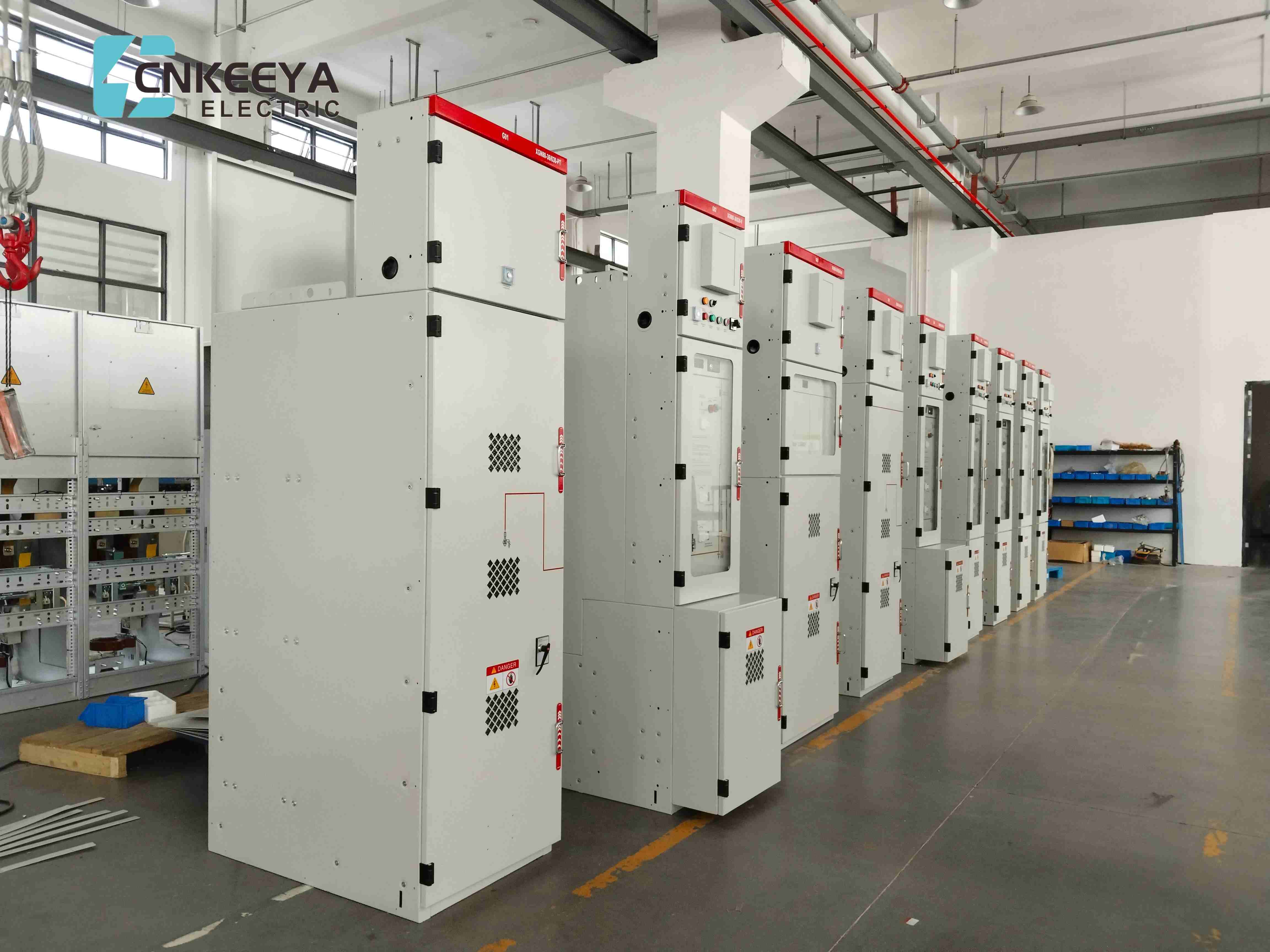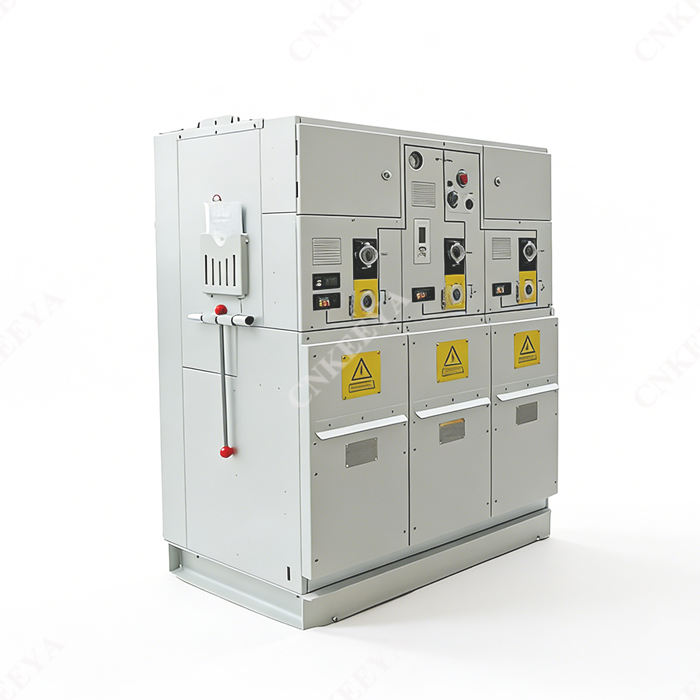

Look here—everything you want to know about gas-insulated switchgear (GIS) is right here~
Basic Concept and Function of Gas-Insulated Switchgear (GIS)
Gas-insulated switchgear (GIS) is a type of switching equipment that seals high-voltage components—such as busbars, circuit breakers, disconnectors, and current transformers—inside a housing filled with a lower-pressure gas (0.1–0.5 MPa) like SF₆ (sulfur hexafluoride) or other insulating gases. Its primary advantage lies in its immunity to external environmental influences, such as condensation, contamination, pests, and chemicals. The use of compressed gas insulation (e.g., SF₆, N₂, or air) also enables a more compact design, supporting miniaturization.

Main Features and Benefits of GIS
GIS is characterized by its compact structure, flexible operation, and reliable interlocking mechanisms. It is suitable for small secondary substations, switching stations, compact substations, residential communities, industrial and mining facilities, and large commercial centers. It is especially well-suited for demanding environments like airports, subways, and railways, where high power reliability is required. GIS also incorporates high-performance oil-free switches, particularly maintenance-free or low-maintenance vacuum switches, significantly reducing maintenance and overhaul workloads.

Application Scenarios of GIS
GIS is applicable in diverse environments, especially in harsh conditions such as high-altitude areas, humid locations, places prone to condensation, salt spray, and typhoons. In these regions, traditional air-insulated switchgear often fails to meet requirements, leading to a gradual shift toward GIS.
Maintenance and Servicing of GIS
Maintenance and servicing of GIS mainly involve regularly checking the gas pressure in the switchgear to ensure it remains within the normal range, as well as periodic cleaning and upkeep to maintain cleanliness and optimal performance. If equipment faults or abnormalities are detected, professional personnel should be promptly notified for repair.
Future Development Trends of GIS
The development trends for GIS focus on high reliability, minimal maintenance, intelligence, cost-effectiveness, and modularity. These features are increasingly making GIS a preferred choice, especially in newly launched grid projects. By incorporating 12kV GIS in designs from the outset, it ensures the equipment can meet operational requirements for extended periods.
In summary, GIS—as a new type of switching equipment—has been widely adopted in power systems due to its unique advantages and features, and its use is expected to expand further in the future.
In-Depth Analysis: Performance Comparison Between GIS and Traditional Switchgear in Various Application Environments

Performance Evaluation: GIS vs. Traditional Switchgear
There are several key differences in performance between GIS and traditional switchgear:
Insulation Performance: GIS typically uses SF₆ or other gases as insulating media. This gas-insulation technology provides superior insulation, especially in harsh conditions like high humidity, heavy pollution, or extreme temperature variations.
Footprint: GIS designs allow for a smaller footprint, as dimensions can be customized to save valuable space.
Maintenance Requirements: Due to their excellent sealing, GIS units generally require less maintenance, leading to lower operational costs and reduced downtime.
Durability and Reliability: The structural design of GIS enhances resistance to external factors like dust, moisture, and corrosion, improving durability and reliability.
Adaptability: GIS is better suited for harsh environments, such as high-altitude regions, humid climates, condensation-prone areas, salt spray zones, and typhoon-affected locations.
Technological Maturity: While GIS holds clear advantages in some aspects, it is relatively newer technology and may not yet match the maturity and widespread adoption of traditional switchgear.
A comprehensive evaluation of GIS performance in different application environments requires considering these factors alongside practical case studies. Additionally, a cost-benefit analysis—covering initial investment, operational costs, and potential maintenance expenses—is essential for making informed decisions in specific contexts.
Latest Advances in the Intelligent Development of GIS and Their Impact on Operational Efficiency and Safety

Recent Advances in Intelligent Development of GIS
Recent progress in GIS intelligence primarily focuses on the following areas:
Integrated Control and Monitoring Systems: GIS is incorporating more control, protection, monitoring, and communication functions for smarter operation and management. This integration enables real-time condition monitoring, early issue detection, and proactive measures.
Online Monitoring Technologies: With advancements in smart sensors and monitoring technologies, GIS can perform online monitoring—tracking SF₆ gas conditions, detecting vibration signals, and more—facilitating timely anomaly detection and fault diagnosis.
Automation and Remote Control: GIS is evolving toward greater automation, enabling operation via remote control systems. This improves operational efficiency and reduces labor costs. Remote monitoring and control also allow quicker responses to equipment changes, ensuring system stability.
Data Analysis and Decision Support: Leveraging big data analytics and AI, GIS can collect extensive operational data and use algorithms to analyze it, supporting maintenance decisions. This intelligent data analysis helps identify optimal maintenance windows, reducing unnecessary costs.
Environmental Sustainability: As global environmental awareness grows, GIS is moving toward reduced use of SF₆ and other harmful gases, lowering carbon footprints. Research is ongoing to develop SF₆-free or low-SF₆ GIS alternatives to minimize environmental impact.
Modularity and Standardization: To improve production efficiency and cut costs, GIS design and manufacturing are shifting toward modular and standardized approaches. Modular designs simplify expansion and maintenance, while standardization helps reduce manufacturing costs and enhance product quality.
These advancements—through increased automation, enhanced monitoring capabilities, data analytics, and sustainability improvements—significantly boost the operational efficiency and safety of GIS. As technology continues to evolve, future GIS will become even smarter, more efficient, and safer.
Considering the Structural Characteristics of GIS, How Does Its Adaptability to Extreme Climates Compare with Traditional Switchgear?
Adaptability of GIS in Extreme Climatic Conditions
The design of GIS ensures excellent adaptability to extreme climates. Its key advantage lies in immunity to external environmental factors like condensation, contamination, pests, and chemicals. This is especially critical in high-altitude areas, humid environments, locations prone to condensation, salt spray zones, and typhoon-affected regions, where conventional air-insulated switchgear often falls short. Consequently, GIS is increasingly adopted in such areas.
Comparison Between GIS and Traditional Switchgear
Compared to traditional switchgear, GIS excels in extreme climates due to its sealing performance and insulating medium. GIS uses compressed gas insulation (e.g., SF₆, N₂, or air), facilitating miniaturization. Additionally, GIS typically features high-performance oil-free switches, especially maintenance-free or low-maintenance vacuum switches, drastically cutting maintenance and inspection workloads.
Latest Advances in GIS
Recent developments show that GIS is integrating more control, protection, monitoring, and communication functions for smarter operation and management. This integration supports real-time condition monitoring, predictive maintenance, and preventive measures. Furthermore, advances in automation and data analytics enhance operational efficiency and safety.
Conclusion
Overall, GIS demonstrates superior adaptability to extreme climates compared to traditional switchgear. Its design and insulating medium enable stable power supply in harsh environments. As technology progresses, GIS functionality and performance will continue to improve, further expanding its application in power systems.
Related News
- Can a GGD Low Voltage Power Distribution Cabinet Deliver Safer, More Reliable Power Distribution
- How Can Post Insulator ZJ-10Q85x140(145/150) Improve the Safety and Reliability of Medium Voltage Power Systems
- Why Is the HYB1-125 C100 MCB Miniature Circuit Breaker the Smart Choice for Reliable Electrical Protection
- How Can the LW36-126 Outdoor High-Voltage AC Sulfur Hexafluoride (SF₆) Circuit Breaker Improve the Reliability of Modern Power Systems
- Why Is a 24kV Solid Insulated Ring Main Unit Becoming the Preferred Choice for Modern Power Distribution
- Why Is XRNP-11 the Preferred High-Voltage Current-Limiting Fuse for Transformer Protection
Leave me a message